

9 Planets (Navagraha) in Vedic Astrology
Vedic astrology rests on nine grahas, known together as the Navagrahas. Every one of them leaves its own mark on your temperament, karma, health and life path, from the Sun, who stands for the soul, through to Ketu, the guide towards spiritual liberation.
Sun
Surya (Surya)
In Vedic astrology the Sun goes by the name Surya (सूर्य). He rules over the nine grahas as their king and stands for your soul, or Atma. Your authority, your will and the bond you share with your father all come under him. When the Sun is strong in a birth chart, you tend to have leadership qualities, links with government and steady self-belief. When it is weak, it often appears as poor self-esteem, weak eyesight or a tiredness that does not go away. Its effect on your career and health is most visible while a Sun dasha is running or when the Sun occupies a kendra house.
Moon
Chandra (Chandra)
Chandra (चंद्र), as Vedic astrology calls the Moon, governs the mind, your feelings and your mother. No other graha travels through the zodiac as quickly; it stays in each sign for about 2.5 days. Where the Moon sat when you were born fixes your Moon sign, or Rashi, and plenty of Vedic astrologers give it as much weight as the ascendant. With a strong Moon, a horoscope shows emotional steadiness, sound intuition and a calm nature. When the Moon is weak or afflicted, anxiety, shifting moods and poor sleep can follow.
Mars
Mangal (Mangal)
Vedic astrology calls Mars Mangal (मंगल) or Kuja, and treats it as the planet of the warrior. Your bodily energy, your bravery and your readiness to act are in its hands. It is also the karaka for younger brothers and sisters, for property and for land. Mangal Dosha, which arises when Mars sits in the 1st, 4th, 7th, 8th or 12th house of the birth chart, carries real weight when two charts are checked for marriage compatibility. With Mars strong, you are likely to be decisive, fit and very independent. With Mars weak, you may face blood-related health problems, quarrels over property and low drive.
Mercury
Budha (Budh)
Known as Budha (बुध) in Vedic astrology, Mercury holds the rank of prince among the nine grahas. It looks after your intellect, the way you communicate and how you take in and handle information. Mercury has a dual nature: it picks up the qualities of whichever planet lies nearest to it in your birth chart. When Mercury is strong, you tend to be quick-witted and well-spoken, and at ease with numbers or with words. A weak Mercury can show as difficulty in speech, a poor memory, skin trouble and problems in business. In the chart, Mercury is also specially linked with your mother's brother.
Jupiter
Brihaspati (Guru)
Jupiter goes by Brihaspati or Guru (गुरु) in Vedic astrology. It is the most powerful natural benefic and serves as Devaguru, the teacher of the gods. Wisdom, good fortune, children and your sense of right and wrong all fall under it. Where Jupiter sits in your birth chart is one of the main signs of how lucky your life will be overall. While a Jupiter dasha runs, or while Jupiter transits a favourable house, you can expect to grow in wealth, learning or spiritual insight. When Jupiter is weak, a horoscope may point to money troubles, difficulty conceiving, liver problems and a sense of drifting without direction. For a woman, Jupiter in her chart also describes what her husband is like.
Venus
Shukra (Shukra)
Vedic astrology names Venus Shukra (शुक्र). He is the guru of the Asuras and the planet of love, beauty and the comforts of the material world. Romance, marriage, luxuries, vehicles and artistic gifts all come under Venus. For a man, Venus in the birth chart acts as the karaka, or significator, of his wife. When Venus is strong, a horoscope shows a happy marriage, financial ease and refined taste. A weak Venus can bring strained relationships, kidney trouble, a lack of charm and discontent with material life. Venus is also tied directly to the way you relate to money and the way you enjoy pleasure.
Saturn
Shani (Shani)
Shani (शनि), as Saturn is called in Vedic astrology, is the visible planet that moves most slowly and the zodiac's stern teacher. It governs discipline, karma, length of life and the results of what you have done before. Few transits in Jyotish are followed as closely as Saturn's, above all Sade Sati (the 7.5-year stretch while Saturn passes over your Moon sign) and Dhaiyya. Saturn is feared by many, yet it rewards those who stay patient, work honestly and live rightly. With a strong Saturn, a horoscope gives staying power, a practical outlook and success earned through steady hard work. A weak Saturn may show as long-term joint pain, depression, setbacks at work and life milestones that keep getting delayed.
Rahu
Rahu (Rahu)
Rahu (राहु) is the north node of the Moon. Vedic astrology counts it as a shadow planet, or Chaya Graha, since it has no physical body. Even though you cannot see it, Rahu acts strongly in a birth chart, and often in ways that are hard to foresee. It magnifies the house and sign it sits in, driving you towards worldly ambition, links with foreign lands and paths that are out of the ordinary. In your horoscope, Rahu can bring a sudden jump in social standing, advances in technology or chances to go abroad. On the other side, it can also cause confusion, obsessive thoughts and a tendency towards addiction. The Rahu dasha lasts 18 years and is often a period in which the course of life turns sharply.
Ketu
Ketu (Ketu)
Ketu (केतु), the south node of the Moon, is the second shadow planet of Vedic astrology. Rahu pulls you out into the material world; Ketu turns you inward, towards detachment, karma from past lives and spiritual liberation, or moksha. In your birth chart, Ketu marks the areas where you hold deep, almost instinctive knowledge carried over from earlier lives. When Ketu is well placed, it gives psychic sensitivity, a gift for healing and keen investigative ability. A weak Ketu can bring sudden losses with no clear cause, confusion about who you are and a lasting sense of being cut off from ordinary life. The Ketu dasha runs for 7 years and often sparks a spiritual awakening or strips away many attachments.
What Are the Navagrahas?
"Navagraha" is a Sanskrit word made of two parts: "Nava", which means nine, and "Graha", which means something that seizes or influences. Vedic astrology (Jyotish Shastra) treats these nine heavenly bodies as cosmic forces, each in charge of different parts of human destiny and of karmic patterns.
Seven of the grahas can be seen in the sky: the Sun (Surya), Moon (Chandra), Mars (Mangal), Mercury (Budha), Jupiter (Brihaspati), Venus (Shukra) and Saturn (Shani). Rahu, the north lunar node, and Ketu, the south lunar node, are the two shadow planets that make up the full nine. Every planet rules particular zodiac signs, keeps natural friendships and enmities with the others, and gives its own kind of results according to where it sits in the birth chart.
By nature, some planets are benefics: Jupiter, Venus, the waxing Moon, and Mercury when it keeps good company. Others are natural malefics: the Sun, Mars, Saturn, Rahu, Ketu and the waning Moon. Their functional role, though, shifts with the ascendant, so a planet that is malefic by nature can still give excellent results if it rules favourable houses.
Explore Houses and Signs
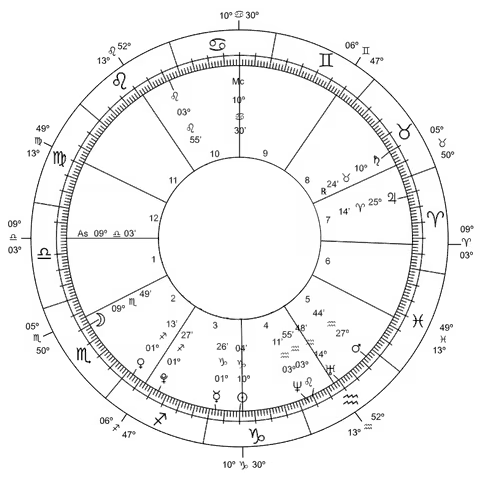
Every planet works inside a structure of 12 houses (Bhavas) and 12 zodiac signs (Rashis). It is the mix of planet, house and sign that gives each birth chart its own character.
Western Astrology Planets
Western astrology works with the same classical planets and adds the outer ones as well: Uranus, Neptune and Pluto. It follows the tropical zodiac and leans towards psychological archetypes instead of Vedic significations. To go further, browse the complete Western astrology section.
Discover Your Planetary Placements
Wondering which planets in your birth chart are strong and which are weak? Astro GPT plans to add an AI Vedic astrologer that reads your Navagraha placements and explains what they mean for your life.
Begin your journey with Astro GPT.
Ask your first question and see what your kundli says about the road ahead.