

What is KP Astrology
The branch of Vedic astrology that puts exact prediction first
Overview
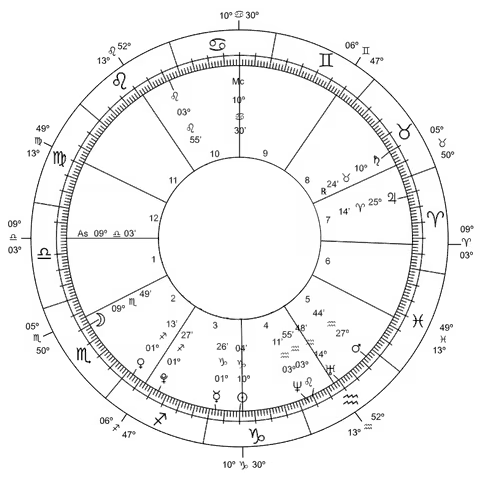
KP astrology (Krishnamurti Paddhati, which means "the method of Krishnamurti") was developed by Prof. K.S. Krishnamurti in the mid-1900s so that astrology could give firmer, more exact answers. Its planets, signs and nakshatras are the ones traditional Vedic astrology uses, but it reads the chart through the sub-lord, through unequal Placidus houses and through an ayanamsa of its own. Rather than painting a wide picture of your life, KP sets out to answer one particular question with a plain yes, no, or when.
Why Krishnamurti built a new method
In classical astrology several planets often get a voice on the same matter, so two readers can come away with two different readings. Krishnamurti was after a way to decide whether an event would or would not happen, without that room for doubt. His solution was to go beyond the sign, and beyond the nakshatra too, to the sub-lord of the point in question, and to let that one planet make the final call.
What KP keeps and what it changes
The nine planets, twelve signs and twenty-seven nakshatras all remain, and the Vimshottari dasha is still used for timing, so a Vedic astrologer will recognise every piece. The difference lies in where the weight falls. KP marks out houses by their exact cusp degrees with the Placidus method, and it judges nearly every matter through the chain that ends in the sub-lord, not through the sign-lord on its own.
The extra tools KP brings
Four ideas take the usual Vedic groundwork and make it KP. The sub-lord cuts each nakshatra into nine parts of unequal size and has the last word. The cuspal sub-lord uses the same idea on the opening degree of a house and decides whether that house's matter is promised in the first place. Significators put in order the planets that bring a house's results, and ruling planets read the present moment to confirm timing. The 249 system spreads all of this across the zodiac, so that one number is enough to drive a horary reading.
What a KP reading looks like step by step
A KP judgement moves through set steps instead of open-ended interpretation. First you phrase an exact question. Then you find the cuspal sub-lord of the house that governs the matter and see whether it promises the result. If it does, the significators tell you which planets will bring it about, and the Vimshottari dasha together with the ruling planets of the moment tells you when. The aim is a firm answer (yes, no, or when) and not a general sketch.
Sources
- K.S. Krishnamurti, Krishnamurti Paddhati (Readers 1-6)
Questions people often ask
- How is KP astrology different from Vedic astrology?
- KP is a branch within Vedic astrology, not a tradition of its own. Its planets, signs, nakshatras and dasha system are the same, but it adds the sub-lord, Placidus houses and the KP ayanamsa to give sharper answers focused on events.
- Who developed KP astrology?
- It was the work of Professor K.S. Krishnamurti, an astrologer from India, who set the method out in a set of books called the KP Readers during the 1960s and 70s.
- Why do people see KP as sharper for prediction?
- Instead of balancing many planets at the same time, it brings a judgement down to a single deciding factor, the sub-lord of the cusp concerned, and so it usually gives tidier yes-or-no answers and narrower timing.
- Can a beginner learn KP astrology?
- Yes. Its rules are orderly, so once you understand the sub-lord and how significators are read, a judgement follows set steps instead of loose interpretation. Knowing some Vedic basics helps, but you can make a start without years of study.
Ask our AI astrologer about KP
Looking for a straight answer to a question? Our AI astrologer can explain KP ideas such as sub-lords and significators and relate them to your own chart, which it reads on the Lahiri ayanamsa.
Chat with AI AstrologerBegin your journey with Astro GPT.
Ask your first question and see what your kundli says about the road ahead.