

Kaal Sarp Dosha Calculator
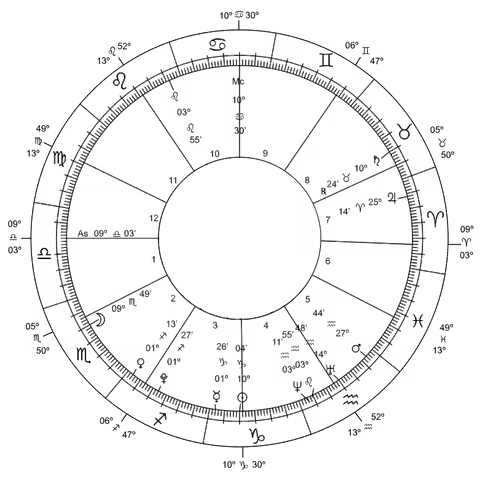
When every one of the seven classical planets is confined to one side of the Rahu-Ketu axis, as though trapped between the celestial serpent's head and tail, the result is called Kaal Sarp Dosha. This calculator looks for the yoga in your birth chart, says whether it is full or partial, and gives the name of your type from among the 12, which depends on the house Rahu is in.
Check Your Kaal Sarp Dosha
The Lagna changes roughly every 2 hours, so the exact birth time and place are needed for a correct answer.
What is Kaal Sarp Dosha?
Rahu and Ketu are the two nodes of the Moon, and they are always placed exactly across from each other, so the line between them splits the chart into two halves. Kaal Sarp Dosha is said to arise when the other seven planets (Sun, Moon, Mars, Mercury, Jupiter, Venus and Saturn) all lie within a single half, with nothing in the other. The picture is of the planets being swallowed between the mouth of the serpent (Rahu) and its tail (Ketu).
The full yoga breaks as soon as a single planet lies on the empty side. If only one planet falls outside, or a planet sits exactly on a node, you have a partial, or Aanshik, Kaal Sarp, which tradition regards as far milder.
A frank note about Kaal Sarp
It helps to see Kaal Sarp Dosha clearly, because its importance is greatly overstated. You will not find it in Brihat Parashara Hora Shastra or the other founding classics; it came later, from the Puranic era, and is mostly a modern idea. Plenty of everyday charts carry it, and in the lives of many successful people it has made no difference whatsoever.
We include it because many people look it up, and they should get a correct check instead of a frightening sales pitch. Treat your result as one way of looking at the chart, check where the planets really sit, and do not allow one label to overshadow the rest of your horoscope.
Full vs partial (Aanshik) Kaal Sarp
For a full Kaal Sarp, all seven planets must be enclosed within the axis. When one planet has moved just outside it (frequently the quick-moving Moon or Mars), the yoga is only partial and, by classical reckoning, much weaker. If that outside planet is a benefic such as Jupiter or Venus, the effect is softened even more. Rather than a bare yes or no, this tool tells you which situation applies to you.
Remedies for Kaal Sarp Dosha
Since the importance of Kaal Sarp is so inflated, the first remedy is a sense of proportion: in most charts that have it, nothing comes of it. If it still troubles you, the traditional practices are simple and focus on Shiva, the ruler of the nodes, such as chanting “Om Namah Shivaya”, offering a Rudrabhishek on Mondays and worshipping on Nag Panchami. Quiet acts of charity and service cost you nothing. Temples such as Trimbakeshwar conduct special Kaal Sarp pujas, but think of these as optional comfort. Paying for one is not required, and you should never allow anyone to scare you into an expensive ritual.
The 12 types of Kaal Sarp Dosha
Each Kaal Sarp type takes its name from the house Rahu occupies, and the type leans the dosha toward one particular area of life. As Rahu and Ketu are always opposite each other, every type links two houses. The calculator tells you your type, and all twelve are listed below in order.
Anant
Rahu 1st · Ketu 7th
With Rahu on the ascendant, attention falls on the self and on close one-to-one bonds: who you are, how confident you feel and the balance of partnership. Early in life it may bring restlessness or self-doubt, but once you find your footing it also gives a strong, self-made drive.
Kulik
Rahu 2nd · Ketu 8th
This type puts money, family and speech up against sudden change. Savings and income may fluctuate, and you may need to choose your words carefully. Once worked through, it builds resilience with money and a calmer way of speaking.
Vasuki
Rahu 3rd · Ketu 9th
Here courage, siblings and personal effort stand opposite faith, fortune and long travel. Your drive is strong, though luck may feel patchy. It pays off when you rely on your own effort instead of waiting for fate.
Shankhpal
Rahu 4th · Ketu 10th
This type creates a tug between home and career, with property, mother and inner peace on one side and work and standing on the other. Peace at home may take effort to earn while ambition keeps pulling you outward.
Padma
Rahu 5th · Ketu 11th
It affects education, creativity and children, while attention is divided toward gains and friendships. Studies or children may come with delays. With persistence and the right company, it becomes steady success that tends to arrive later.
Mahapadma
Rahu 6th · Ketu 12th
This type covers health, debts and opponents, together with the hidden losses of the 12th house. Problems may seem to appear out of nowhere. Classically, it is also seen as a fighter's placement, one that defeats enemies once the hard early phase is over.
Takshak
Rahu 7th · Ketu 1st
Of all the types, this one is most about relationships: marriage, partnerships and business ties come to the fore, at times with delay or friction. With patience and the right partner, it becomes manageable rather than fixed by fate.
Karkotak
Rahu 8th · Ketu 2nd
This type brings sudden shifts and upheaval, affecting longevity, inheritance and the family's wealth. Life may feel full of highs and lows that you cannot control. Often it pushes you toward a deeper and more resilient sense of security.
Shankhchud
Rahu 9th · Ketu 3rd
Fortune, father and beliefs are set against courage and personal effort. Your luck and faith may be tested before they become steady. It usually favours people who make their own way rather than depending on what they inherit.
Ghatak
Rahu 10th · Ketu 4th
Career, status and authority are pitted against home and inner calm. Ambition at work is strong, but it may come at the cost of peace at home. With this type, the task is to keep both in balance.
Vishdhar
Rahu 11th · Ketu 5th
The focus is on income, gains and your social circle, while children and creativity also draw your attention. Earnings may be irregular and friendships hard to predict. Over time, consistent effort turns scattered gains into lasting ones.
Sheshnag
Rahu 12th · Ketu 6th
This type highlights expenses, foreign places and spiritual life, weighed against health and day-to-day work. Costs and worries may pile up, at times far away from home. It is also a deeply spiritual placement that matures through letting go.
The type only shades which area of life is in focus; far more important than the name are whether the yoga is full or partial and where the planets really sit.
Checking your Kaal Sarp Dosha, step by step
- 1Enter your date of birth.
- 2Enter your exact birth time. The Kaal Sarp type depends on Rahu's house, which needs your ascendant.
- 3Select your birth place for accurate coordinates and timezone.
- 4Press Check to see whether the yoga forms, if it's full or partial, and which of the 12 types it is.
Frequently Asked Questions
- How can I tell whether I have Kaal Sarp Dosha?
- It is present when all seven planets, from the Sun to Saturn, lie between Rahu and Ketu on a single side of the axis. Fill in your birth details above, and the calculator places each planet and tells you straight away whether the yoga forms, whether it is full or partial, and which of the 12 types it is.
- Is Kaal Sarp Dosha a real thing or just a myth?
- The planetary pattern itself is genuine, but its fearsome reputation is a modern one. Classical texts such as Brihat Parashara Hora Shastra do not describe Kaal Sarp; it was added later. Lots of ordinary people, and many highly successful ones, have it. See it as just one factor among several.
- What does partial (Aanshik) Kaal Sarp mean?
- The yoga is partial when six of the seven planets are enclosed within the Rahu-Ketu axis and only one lies outside, or when a planet sits exactly on a node. Classically it is thought to be much gentler than a full Kaal Sarp, all the more so when the planet outside is a benefic such as Jupiter or Venus.
- What are the 12 types of Kaal Sarp Dosha?
- Each takes its name from the house Rahu is in: Anant (1st), Kulik (2nd), Vasuki (3rd), Shankhpal (4th), Padma (5th), Mahapadma (6th), Takshak (7th), Karkotak (8th), Shankhchud (9th), Ghatak (10th), Vishdhar (11th) and Sheshnag (12th). The calculator gives you the name of your type and the area of life it focuses on.
- Is my exact birth time needed?
- It is needed for the type. Whether the yoga forms at all depends only on the longitudes of the planets, but giving the type its name (Anant, Takshak and so on) depends on which house Rahu is in, and that requires your exact birth time and place. If you leave out the time, we use noon and let you know the result could change.
- For how long does Kaal Sarp Dosha last?
- The classics set no fixed period for it. The figures of 27 to 54 years quoted online do not come from the foundational texts. Where any effect is felt, astrologers link it to the running Rahu and Ketu periods (dashas), so it grows and eases with timing instead of lasting for a fixed number of years.
- Which remedies are suggested for Kaal Sarp Dosha?
- Traditionally, the remedies focus on Shiva, the ruler of the nodes: chanting “Om Namah Shivaya”, a Rudrabhishek on Monday and worship on Nag Panchami, together with quiet charity and service. Temples such as Trimbakeshwar offer special Kaal Sarp pujas. As the dosha is so heavily overstated, think of any remedy as optional comfort, and never allow anyone to scare you into an expensive ritual.
- Is my data kept private, or are my birth details and results stored?
- No, we keep nothing. All the calculations happen live inside your browser, and neither your birth details nor your results are saved on our servers. You do not need to sign up or create an account, and no history is kept, so you can use the calculator privately as many times as you want.
References
- Puranic tradition of the nodes: Kaal Sarp Yoga as every planet enclosed within the Rahu-Ketu axis (absent from the classical Hora texts)
- Usual Jyotish naming of the 12 Kaal Sarp types according to Rahu's house (from Anant through Sheshnag)
- Lahiri (Chitrapaksha) ayanamsa: the standard used to place Rahu, Ketu and the seven planets
- astronomy-engine: up-to-date models derived from NASA/JPL data that work out the positions inside your browser
Kaal Sarp Dosha is a later idea that is not found in the classics, and its effects are often blown out of proportion. This tool shows the pattern correctly so that you can make sense of it. Look at it together with your whole chart, and speak to a qualified astrologer before you act on it.
Begin your journey with Astro GPT.
Ask your first question and see what your kundli says about the road ahead.